
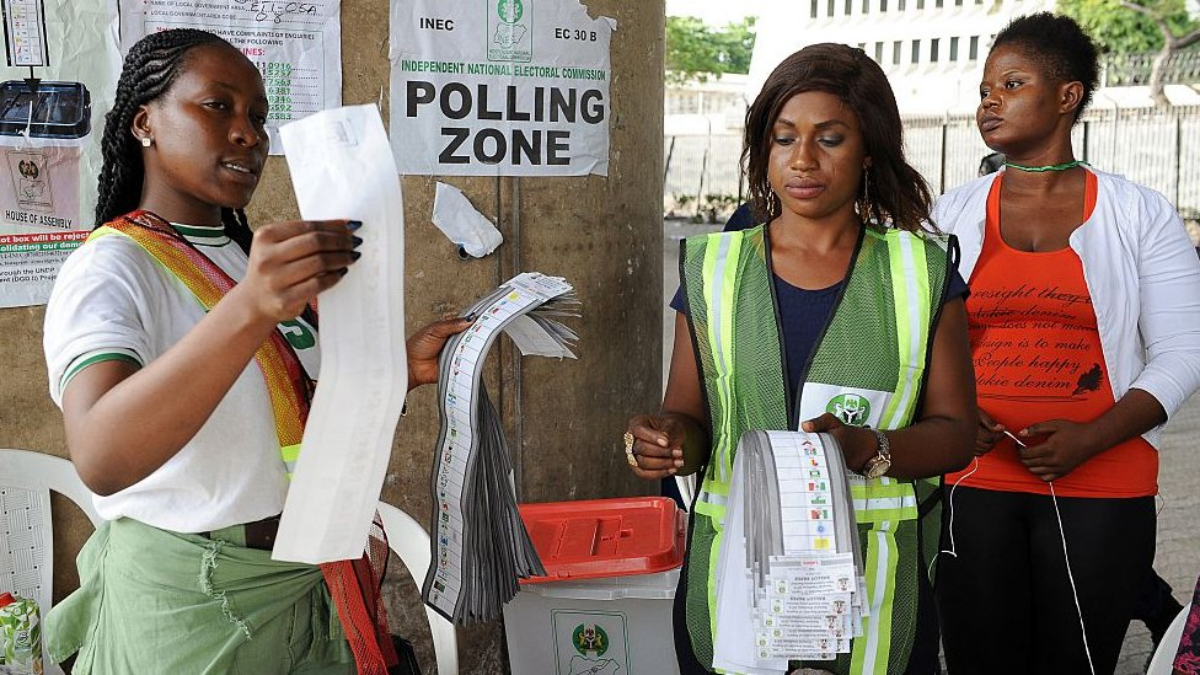
INEC’s portal for engaging ad hoc staff for the 2027 general election opened at 8:00am on 18 September 2026 and closes at midnight on Wednesday, 18 November 2026, according to the Commission’s official public notice. That same notice lists who can apply for each role, but it doesn’t state any allowance for any of them, so the pay figures you see shared online haven’t come from INEC’s notice yet.
If you’re weighing up whether election duty is worth it, you need to understand two things before you apply, which are a clear picture of what each role involves on the day and an honest view of what’s actually been confirmed about money. This guide covers both, using INEC’s 2027 engagement notice and the duties set out in the Commission’s 2023 Manual for Election Officials.
INEC hasn’t put a naira figure on 2027 ad hoc pay yet
The 2027 engagement notice covers the roles, the eligible groups, the application window and the helpdesk contacts, and it says nothing about allowances. INEC’s 2023 Manual for Election Officials doesn’t list payment rates either. Until the Commission publishes figures through its own website or official social media accounts, treat any amount you see for training, Presiding Officers or Assistant Presiding Officers as unconfirmed.
What the 2023 manual does spell out is ad hoc personnel electoral hazard insurance. It says the Commission covers the cost of treatment for accidents sustained while on election duty, and provides financial compensation to the family if an ad hoc staff member dies on duty. Claims go through the office of the Resident Electoral Commissioner in the state where you served, and the manual says accidents or deaths must be reported immediately.
Your background decides which election job you can get
INEC doesn’t let everyone apply for every role. The 2027 notice draws each position from specific groups, so it’s worth checking which one you fall into before you start filling the form.
| Role | Who INEC says can apply |
|---|---|
| Supervisory Presiding Officer (SPO) | Federal and state civil servants on GL 10 to 14, and INEC staff. Priority goes to qualified staff of INEC, NYSC, NOA, NIMC and NPC |
| Presiding Officer (PO) and Assistant Presiding Officers (APO I, II and III) | Serving corps members; former corps members who finished service in 2024, 2025 or 2026; students in their penultimate year, or year 2 or 3, at federal and state tertiary institutions; and permanent MDA staff with OND or NCE on GL 07 to 10 |
| RAC Manager | The head of the school or institution hosting the Registration Area Centre, or a staff member there on GL 07 and above |
| Registration Area Technical Support (RATECH) | INEC ICT staff at state offices and headquarters who aren’t on other duties, plus IT students from federal and state tertiary institutions |
| Source: INEC public notice on online engagement of ad hoc staff for the 2027 General Election | |
Most graduates and students will be looking at the PO and APO roles, since those are the ones open to corps members, recent ex-corps members and tertiary students. If you finished NYSC before 2024, the notice doesn’t include you in the former corps member group.
The Supervisory Presiding Officer carries the whole Registration Area
The SPO’s work starts days before the election. The 2023 manual says SPOs attend two days of training, visit their assigned Registration Area Centres and polling units at least two days before polling, collect the list of poll officials from the Electoral Officer, and collect election materials at the local government office on the eve of the election. They must get officials and materials to the RAC by 4:00pm that day and run refresher training there, including checking that the BVAS devices are ready.
On election day, the SPO hands polling unit materials to the Presiding Officers, makes sure vehicles, security and staff are ready to move by 5:00am, and ensures officials reach their polling units before 7:00am. After the polls, the SPO makes sure Presiding Officers deliver their results and BVAS to the Registration Area Collation Officer, then handles the return of materials, which the manual says should be complete by 8:00am the following day. The manual also states that the SPO has “no right to replace anyone without the express permission of the Electoral Officer”.
The Presiding Officer is in charge of everything at the polling unit
The PO coordinates every activity at one polling unit. According to the manual, you take delivery of the materials, check them and keep sensitive items such as ballot papers and result sheets secure, and arrive at least one hour before voting starts to set up. You paste the required notices, have the Voter Code of Conduct read aloud, issue ballot papers, and make sure voters drop their thumbprinted ballots in the right box.
The PO also looks after voters with disabilities, providing Braille ballot guides or magnifying glasses where they’re available, and records them on the right form. When voting ends, you transmit accreditation data with the BVAS, upload the scanned polling unit result, deliver the result sheets and BVAS to the Registration Area Collation Officer, and return other materials to the SPO. Through the day you report security incidents, can remove any party agent who aids malpractice, and record problems in the Polling Unit Booklet.
Each Assistant Presiding Officer handles a different stage of voting
APO III works at the front of the line as queue controller. The manual says this officer keeps the queue orderly, removes campaign materials from the polling unit, gives voter and peace education before voting starts, sets up separate queues where required, including one for persons with disabilities, confirms voters are at the right polling unit, and checks fingernails for ink to make sure nobody has voted already.
APO I verifies and authenticates voters with the BVAS, and steps in for the PO if the PO has to leave after voting begins, until the PO returns or is replaced. APO II checks that each voter’s details are in the Register of Voters and ticks their name, applies indelible ink to the correct finger, fills in the polling unit’s statistics forms, and helps prepare and sort ballots. All three APOs help collect materials from the SPO and return them after the poll.
RATECHs keep the BVAS working
Registration Area Technical Support staff are the technology hands of each Registration Area. The 2023 manual says RATECHs run refresher training for Presiding Officers at the RAC, support the use of the BVAS, repair devices that malfunction, configure a replacement BVAS for any polling unit with a faulty one, and verify that polling unit results have been uploaded to the IReV portal.
RAC Managers come from the schools that host Registration Area Centres. The manual describes a RAC as the place where poll officials and materials stay overnight before the election, while a Super RAC is two or more RACs in one location. The manual doesn’t set out separate duties for an RAC Manager, so if you’re offered that role, confirm what’s expected with your Electoral Officer.
Apply through INEC’s own portal before 18 November
The notice says applications go through the INEC Portal for Engagement of Election Staff (INECPRES). On a laptop or desktop, use pres.inecnigeria.org, which you can also reach from inecnigeria.org. INEC also lists an Android app at inecnigeria.org/pres.apk, so download it from INEC’s own website rather than from a link someone forwards to you.
If you run into problems, the notice lists a 24-hour helpdesk on 0700-CALL-INEC and the email address inecpress@inec.gov.ng. Never pay anyone who promises to secure an ad hoc slot for you, and don’t enter your details on websites that only look like INEC’s.
Our post on the INEC 2026 recruitment explains how the Commission’s earlier exercise this year worked. For other openings around you, our guide to finding work in Isoko North and Isoko South is a good next stop.




Join the conversation