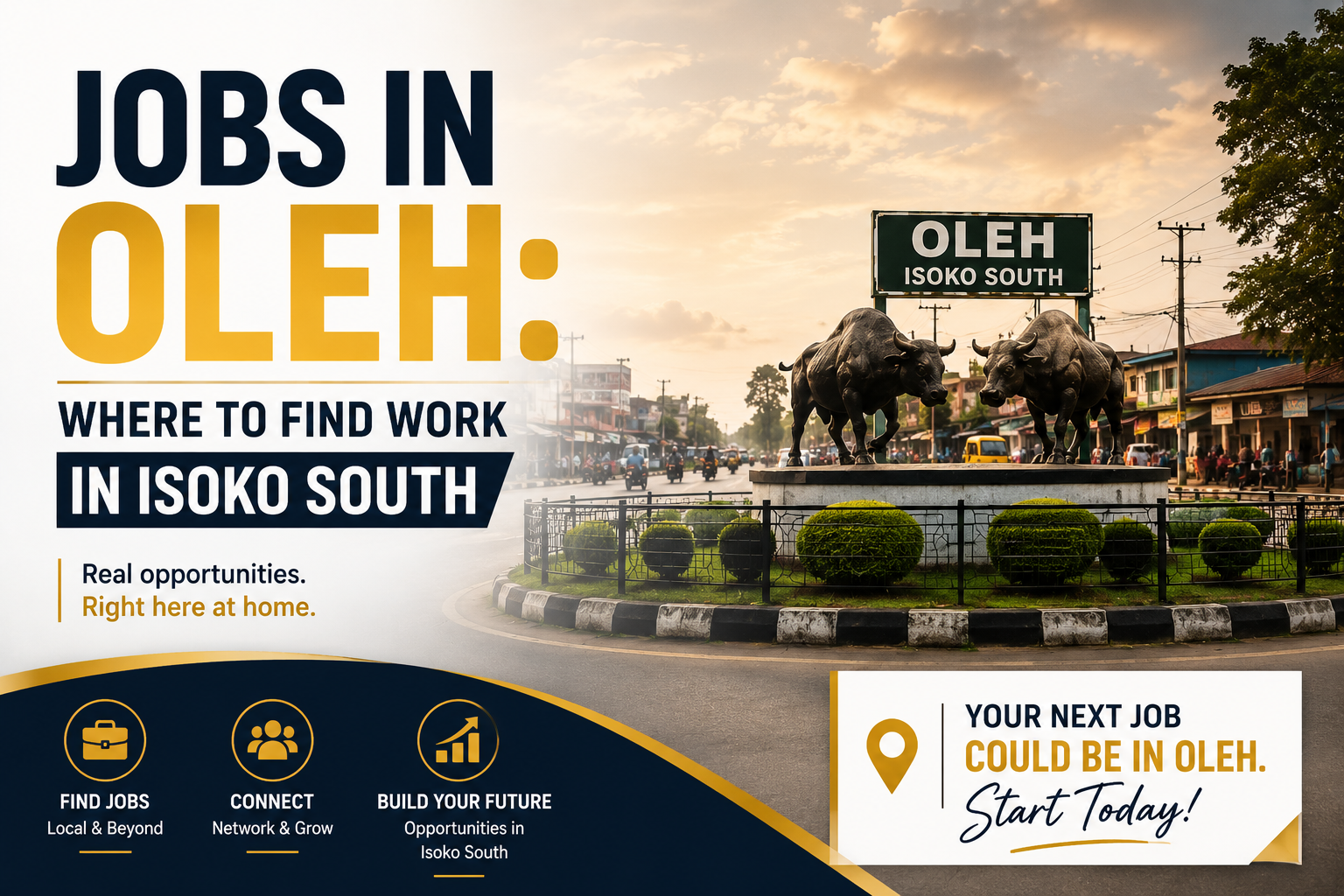
Oleh hosts the Delta State University campus that houses the Faculty of Law and the Faculty of Engineering, established under the 1995 Amended Edict. According to a Delta State Ministry of Education report, over 80% of Oleh residents can read and write. Those two facts shape the job market here more than anything else, because a town with a university campus and a highly literate population produces far more qualified applicants than it produces advertised vacancies.
Oleh is the headquarters of Isoko South, the larger of the two Isoko local government areas at 668 square kilometres with a population of 235,147 at the 2006 census. If you’re looking for work here, the competition is real but so is the opportunity, and most of it sits in places a national job site will never show you.
The DELSU campus is the biggest employer in Isoko South
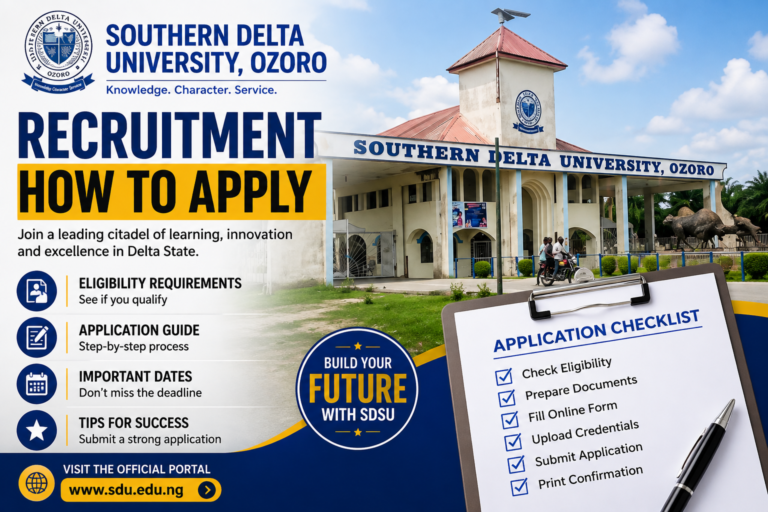
Delta State University runs three campuses. The main one is at Abraka in Ethiope East, there’s a campus at Anwai in Asaba, and the Oleh campus serves the Isoko region. Between them they carry over 25,000 students, and the Oleh campus alone has seven halls of residence.
A campus that size is a substantial employer, and the jobs go well beyond lecturing. Registry, bursary and admissions staff, laboratory technologists for the engineering faculty, library staff, hall porters and hostel administrators, security personnel, drivers, groundskeepers and maintenance workers all sit on the payroll. Vacancies are advertised through the university and applications generally go to the Registrar.
The student population also sustains a whole layer of businesses that hire locally. Accommodation, food vendors, printing and business centres, transport, cyber cafes and provision shops around the campus all need staff, and they hire on a term-time rhythm rather than a corporate one. That work rarely gets advertised anywhere, so proximity and being known matter more than a CV.
A technical college is coming to Irri
The Delta State Executive Council approved plans to equip the Technical College at Irri once construction is complete, alongside similar work at Oghareki. Irri is in Isoko South, which makes this the most significant new employer on the horizon for the local government area.
A technical college needs instructors in trades and engineering subjects, workshop technicians, laboratory staff, administration, security and maintenance. It also changes what’s available to learn locally, which matters if you’re trying to get into oil servicing work and keep hitting the same wall over certification. Worth watching closely if you hold a technical qualification or a trade certificate.
Isoko South sits on some of the oldest oil production in Delta
The first oil well in Delta State was drilled at Uzere in 1959, with Olomoro following in 1962. Both towns are in Isoko South, and the Olomoro-Oleh and Uzere fields fall under OML 30, operated by Shoreline Natural Resources with producing flow stations and gas compression facilities in the area. Uzere alone holds around 43 wells producing roughly 53,000 barrels per day.
That’s a lot of industrial activity within reach of Oleh, but the hiring route confuses people. The operators don’t generally take on junior staff directly from the community. The work comes through servicing contractors, security firms, catering companies, logistics providers and maintenance outfits, and it’s distributed partly through community liaison offices and host community committees rather than through adverts.
Practical certification is what moves you up the list. Welding, fitting, instrumentation, safety certification and plant operation are consistently wanted, and holding one puts you in a much smaller pool than general applicants. This is also why the Irri technical college matters more than it might first appear.
Schools here hire constantly, and teaching is the biggest employer after the campus
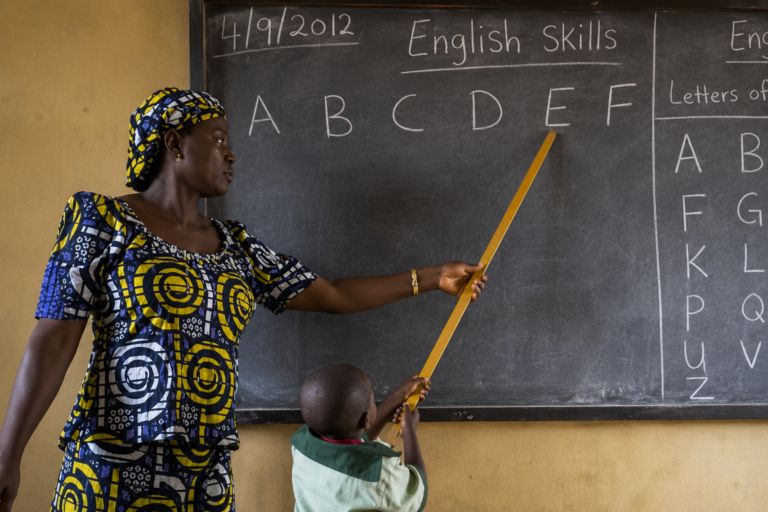
Oleh has a dense cluster of schools including Isoko Central School, Evoja Primary School, Odoro Primary School, Owhara Primary School, Uzi Primary School, Emiye Girls’ Grammar School, Emore Grammar School and Saint Michael’s College. Add the schools across the other Isoko South communities and teaching becomes the single largest category of public employment in the area.
Private schools hire directly and often at short notice, usually through word of mouth or a notice on the gate. Public school employment runs through state recruitment instead, so it’s worth knowing what teachers actually earn in Delta State and how to check whether a recruitment exercise is genuine before committing money or documents to any claim you see circulating.
State and council recruitment gives priority to indigenes, and the document that proves it is a Certificate of State of Origin signed by the Local Government Chairman or Secretary. For Isoko South people that means the secretariat in Oleh, and getting it before an application window opens rather than during one has decided more outcomes than qualifications have.
Farming, fishing and trade still carry most households
The traditional occupations across Isoko South are fishing and agriculture, with cassava, palm oil and rubber as the main products. That supports processing, haulage, supply and market trading businesses that take on staff without ever advertising.
Oleh itself is the administrative and commercial centre for eleven communities, taking in Aviara, Olomoro, Emede, Enhwe, Erowha, Igbide, Irri, Okpolo, Umeh and Uzere. Shops, pharmacies, filling stations, hotels, laundries, block industries, poultry and fish farms and transport businesses all hire around the town, and Olomoro functions as a second population centre in its own right. These roles pay less than campus or oil sector work but they’re far easier to enter, and plenty of people use them as a bridge.
Plan around the flooding, because it affects hiring
Oleh has faced serious flooding in recent years. The 2022 floods caused loss of life and property, restricted vehicular movement and disrupted commercial activity across the town. Anyone who lived through it knows what that does to trading businesses and to anybody whose work depends on getting somewhere each day.
For job seekers this is worth factoring in practically. Casual and trade-dependent work becomes unreliable during flood season, while institutional employment at the campus, the secretariat and the schools holds up better. If you’re choosing between a stable role and something better paid but seasonal, that’s part of the calculation here in a way it isn’t in Warri or Asaba.
Where to actually look
Filter a national job site for Oleh and you’ll find close to nothing, which people misread as there being no work. What it really shows is that hiring here moves through the secretariat notice board, church announcements, town union meetings, the DELSU campus, WhatsApp groups and personal networks, none of which reach the internet.
So work both channels. Watch online for the campus and state recruitment batches, and stay physically visible for everything else. Our complete guide to finding work in Isoko covers the wider picture across both local governments, and how to apply for jobs sets out the paperwork to have ready before a window opens.
We publish verified vacancies for Oleh and the surrounding communities as they come in, and if you run a business here you can post your vacancy free of charge.
👉 Join our WhatsApp Channel to never miss a job update.